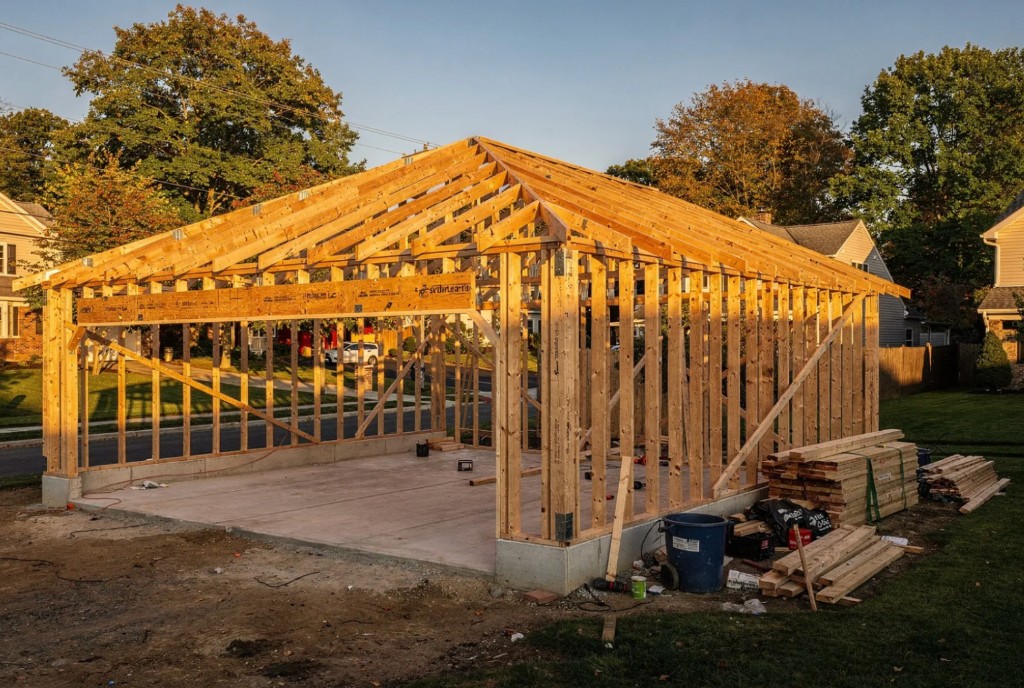
Homeowner planning
A detached garage by spring in North Jersey starts with August–September permits, concrete, and crew scheduling before winter slows everything down.
To get a detached garage by spring in North Jersey, you need late-summer lead time for design, permits, and utility markouts, plus a dry-weather window for excavation and concrete before the first hard freeze. If you wait until fall or winter, inspections slow, materials back up, crews book out, and cold-weather concreting adds delays and cost. NJ Vinyl Siding site-builds detached garages with matched siding, coordinated overhead doors through a trusted supplier, and permit management across twelve counties.
9 min read
Aug–Sep
Best start window
Beat winter delays
2–6 wks
Permit window
Most townships
3–8 wks
Build timeline
After permits
50°F+
Concrete temps
Optimal pour window
Key takeaway
To get a detached garage by spring in North Jersey, you need late-summer lead time for design, permits, and utility markouts, plus a dry-weather window for excavation and concrete before the first hard freeze.
What you will learn from this guide
- The real, local timelines for permits, surveys, and inspections in Bergen, Passaic, Essex, Morris, and Hudson counties
- Why concrete and sitework must beat the freeze, and what happens if they do not
- Material and crew lead times you will not see on a brochure
- A step-by-step August–spring schedule you can actually follow
- Budget, weather, and risk tips to avoid winter slowdowns
Permits and paperwork: the clock you cannot see
Think of permitting like airport security at peak holiday travel. No matter how ready you are, there is a line. In North Jersey, most detached garages trigger zoning review, building permits, and sometimes engineering for drainage or a minor grading plan. Here is what homeowners do not usually plan for.
Ordering or updating a property survey can take 1 to 3 weeks. Zoning review often runs 10 to 20 business days, longer if you are near setbacks, easements, or a flood zone. If your project needs relief on setbacks or height, plan for 6 to 10 weeks minimum for notices, a hearing date, and a resolution. It is rare, but it is real.
Structural, electric, and sometimes plumbing reviews can add another 2 to 4 weeks depending on township volume and holidays. After permits, every milestone requires inspections: footing, slab, framing, electric rough, final. Typical scheduling is 2 to 7 days out, but around holidays and storms, expect longer.
Start in August–September and you are more likely to clear design, survey, and zoning in time to break ground before heavy fall rains and early freezes bog everything down. NJ Vinyl Siding prepares documents, submits to your local office, and manages inspections across Bergen, Passaic, Essex, Union, Morris, Hudson, and nearby counties.
Beat the freeze: foundations, concrete, and sitework realities
Can you pour concrete in winter? Technically yes, with heated water, insulated blankets, accelerators, and tight temp monitoring. Practically speaking, you will pay more and wait longer. North Jersey frost depth is approximately 36 inches, and once soils freeze or saturate, excavation slows dramatically.
Late summer into early fall offers drier soil and longer daylight. By November, saturated ground, leaf-clogged drainage, and cold snaps become constant wild cards. Optimal concrete placement is above 50°F. Cold pours require additives and protection, and inspectors may require stricter measures, adding time and cost.
Muddy or frozen drives delay deliveries and footers. Asphalt plants reduce hours or close seasonally, making aprons and driveways a spring task no matter what. That is fine, but only if your shell is already buttoned up.
A Montclair homeowner started in October, missed the last good pour week, and waited out two nor'easters. Their slab went in late March. By contrast, a Ridgewood family kicked off in late August. Their shell was weather-tight by Halloween and finished out comfortably over winter.
Materials and crew: the lead times no one mentions out loud
You are not just timing weather. You are syncing with supply chains and calendars. Trusses, LVLs, and framing packages often run 2 to 6 weeks in late summer and longer by late fall. Garage doors and openers commonly take 2 to 8 weeks depending on size and style. Insulated carriage doors tend to run longer.
Siding, roofing, and windows are usually in stock, but specialty colors or profiles can stretch 1 to 4 weeks. By October, many electricians and masons are stitching jobs around storms, short daylight, and year-end backlog.
Stack those variables and you will see why how long does it take to build a detached garage in North Jersey so often turns into it depends. Starting in August–September shrinks the unknowns and locks in crews before the rush.
NJ Vinyl Siding specifies and coordinates overhead garage doors through a trusted supplier. We are not a retail door store, but we measure openings, order the door package, and schedule professional installation to align with framing and trim.
Your late-summer-to-spring game plan
If you want a conversion-ready shell by spring, or even earlier, use this simple, realistic schedule. NJ Vinyl Siding builds the week-by-week plan into your written proposal after an on-site measure.
- Weeks 0–2 (August): Site walk, concept plan, order or update survey, confirm zoning and setbacks. Call 811 (New Jersey One Call) to mark utilities before any digging.
- Weeks 2–4: Finalize drawings. Prepare drainage notes if required. Select door size, roofline, siding, and trim now to avoid rework later.
- Weeks 3–6: Submit permits for building, zoning, and electric. Pre-order long-lead materials like trusses and the garage door. Get on your contractor excavation calendar.
- Weeks 6–10 (September–October): Approvals land. Break ground. Excavate, set forms, pour footings and slab while temperatures cooperate.
- Weeks 10–14 (October–November): Frame, sheath, roof, and side the shell. Install windows and entry door. Aim to be weather-tight before Thanksgiving.
- Weeks 14–20 (late fall–winter): Rough electric, insulation if planned, and interior prep. Exterior apron and final grading often wait for a spring thaw if the structure is sealed.
- Early spring: Install garage door if lead time pushed it out. Finish apron and driveway, gutters, final grading, and seed. Schedule finals and enjoy the keys.
Weather, risk, and budget: the case for starting now
Cold-weather concrete adds material and labor cost. Avoiding it is an easy save. Crews move faster with longer days. December early sunsets quietly stretch timelines. Municipal offices and suppliers run reduced hours or close intermittently around holidays. That slows permits and parts.
If your property touches a mapped flood zone or needs a simple drainage design, that is one more reason to get a head start. Seasonal demand and supply cycles can bump prices 3 to 10%. Locking your plan in late summer reduces surprises.
NJ Vinyl Siding delivers a line-item fixed-price proposal after measuring setbacks, trenching length, and finish goals on site. Photo quotes are a fast ballpark. The on-site measure locks dimensions, setbacks, and finish selections.
Quick reality check: waiting until fall or winter
It is tempting to say we will start after the holidays. Here is what usually happens when you wait.
- Permits submitted in December do not clear until mid-to-late January, or later
- Ground is frozen or saturated. Excavation waits for a break in weather
- Concrete needs cold-weather measures. Some days are just a no-go
- Materials trickle in. That custom door? Backordered
- You burn February and March trying to do what August and September made simple
Ready for spring keys?
If your goal is a detached garage by spring, whether it is a workshop, a future ADU shell, or just a clean, dry place for the car, late summer is your launch pad. Start in August–September, beat the freeze, and lock in materials and crews while schedules are friendly.
Still deciding attached vs detached, or expand vs rebuild? Read the attached vs detached garage guide and the expand vs rebuild guide before you commit to a footprint. For a full builder walkthrough, see the detached garage builder guide on permits, timeline, and what to expect on site.
Common questions
Detached garage fall-start FAQ
Start in August–September for the best shot at a spring-ready detached garage in North Jersey. Late summer gives you time for surveys, zoning, permits, utility markouts, and a dry-weather window for excavation and concrete before the first hard freeze. NJ Vinyl Siding walks your lot and maps setbacks and permit steps on one written proposal.
Map your path from first sketch to spring keys
NJ Vinyl Siding walks your lot, confirms setbacks and permit steps, and builds North Jersey garages the smart way: predictable, code-compliant, and timed to our climate. Request a photo quote and we will map your dates and scope on one written proposal.