
Gutters and walls
Why water gets behind your gutters in New Jersey (and what to fix first).
Water gets behind gutters in New Jersey because of one or a mix of four culprits: gutter overflow, ice dams, missing kick-out flashing, or rotted fascia. Overflow shows after heavy rain. Ice dams appear after freeze-thaw. Missing kick-outs stain walls. Rotted fascia loosens gutters. A pro should first stop active water entry, then correct causes.
11 min read ·
4
Common culprits
Overflow to fascia rot
Rain
Overflow test
Watch during downpours
Thaw
Ice dam test
After freeze-thaw cycles
23+
Years local
North and Central NJ
Key takeaway
Water behind gutters usually traces to overflow, ice dams, missing kick-out flashing, or rotted fascia. Stop active entry first, then fix the water path with flashing, drainage, and attic upgrades so you only do the job once.
What you will learn
- How to tell gutter overflow vs ice dams vs missing kick-out flashing vs rotted fascia at a glance
- What to check during rain vs during a thaw
- The right repair sequence so you fix leaks once, not three times
- NJ-specific tips for nor'easters, short roof overhangs, and vinyl siding details
- What to ask a contractor and what photos help you get an accurate quote
Start here: the 60-second curbside diagnosis
Stand back after a storm or thaw and match symptoms to cause. Four patterns cover most North Jersey homes.
- Overflow (heavy rain): dirty tiger stripes on the gutter face, brown streaks below downspouts, mulch washed out, damp soffits after a downpour. Usually worse near inside corners or long runs with one downspout
- Ice dams (freeze-thaw): icicles behind the gutter or from soffit vents, ceiling stains a day or two after a thaw, a hard ridge of ice at the eave, wet attic insulation near exterior walls
- Missing kick-out flashing (wall intersection): brown streaks on siding starting exactly where a roof edge meets a wall, wet or swollen sheathing behind siding, interior peeling paint at the same vertical line. Often at second-story rooflines dumping into a wall
- Rotted fascia (attachment): wavy or tilting gutters, spikes pulling out, soft wood behind aluminum wrap, gaps between gutter back and drip edge. Water sneaks behind even in light rain
Overflow vs ice dams: the rainy-day test and the freezing-week test
When it pours in Bergen, Essex, Union, or Morris, stand back and watch. If water shoots over the front lip like a mini waterfall, especially under a nor'easter's sideways rain, you are looking at capacity or pitch problems.
- Downspouts that choke at elbows or discharge into underground lines that burp back up
- Runs longer than 40 feet with only one small downspout
- Debris mats at inside corners, under leaf covers, or where a tree shades the roof
- After a deep-freeze followed by a sunny 35 to 40 degree day, look for ice ridges at the eaves while the upper roof is melting
- Drips from soffit vents or siding seams after thaw point to attic air leaks and meltwater refreezing at the cold edge
- Quick attic check on a cold morning: frost on nails, damp insulation by the eaves, dark sheathing stains. Stains only after thaws are classic ice dam behavior
- Gutter sizing and guards guide: /guides/gutter-guards-nj
- Freeze-thaw siding damage: /guides/freeze-thaw-siding-damage-nj
The sneaky culprit: missing kick-out flashing where roof meets wall
Imagine a small angled metal piece at the shingle end that kicks water into the gutter and away from siding. Without kick-out flashing, water hugs the wall by surface tension, slides behind siding, and shows up as brown vertical streaks or interior stains.
At roof-to-wall intersections you should see step flashing up the wall and, at the bottom, an angled piece that throws water into the gutter. If you only see siding tight to shingles and stains below, kick-out flashing is likely missing.
Real-world NJ example: after the first ice season, a Morris County homeowner saw a tan drip line beneath a second-story wall. It was not an ice dam. A missing kick-out was pouring meltwater behind siding every sunny day.
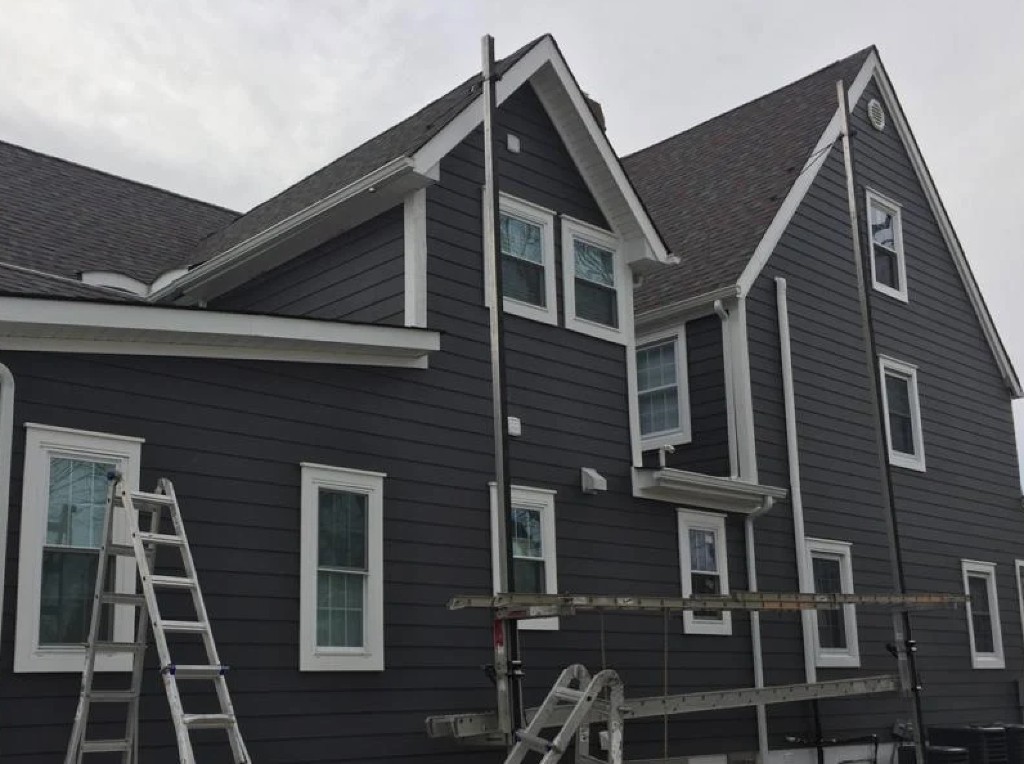
- Staining often starts under a second-story short roof that dies into a side wall above a first-floor roof or garage
- House wrap and flashing detail: /blog/house-wrap-flashing-siding-north-jersey
- Soffit and fascia with siding: /guides/soffit-fascia-with-siding-replacement-nj
When wood gives up: rotted fascia hides in plain sight
Fascia is the wood board the gutter hangs from. Once it softens, gutter spikes and hangers cannot hold grade, the back gutter edge cannot tuck under the drip edge, and water sneaks behind even during moderate rain.
In Essex County, a house with perfect-looking aluminum trim still leaked at the soffit. The wrap hid Swiss-cheese fascia. Once replaced and properly flashed with a new drip edge, the same gutter ran dry and quiet.
- Gutters that back-pitch with water sitting days after rain
- Nail heads pulling out, aluminum wrap bowing, or paint bubbles along the eaves
- Press gently from a ladder only if safe. Mushy wood or carpenter ant activity means replace before rehang
- Do not install new aluminum over soft wood and call it done
The fix-first playbook: priority order that actually stops the leak
If you see interior stains or active soffit drip, sequence matters. Do the minimum to stop water now, then lock in the permanent cure.
Triage now (stop the water)
- Clear blockages: clean gutters and downspouts end-to-end. Verify flow with a hose. Check underground drains if connected
- Temporary diverters: add peel-and-stick kick-out or a formed deflector where roof meets wall until permanent flashing is installed
- Heat-cable assist (ice season only): add thermostatic heat cable over the eave while you plan insulation and venting improvements
Permanent fixes (in smart order)
- Restore proper water path: install kick-out flashing at every roof-to-wall termination. Add or upsize downspouts. Break long runs with a new outlet. Re-pitch sagging sections. Use wider 6 inch K-style gutters where canopy or roof area demands it
- Rebuild the attachment: replace rotted fascia, install new drip edge, hang gutters with hidden hangers into solid framing every 24 to 32 inches
- Control roof melt (ice dam prevention): air seal attic penetrations, boost eave insulation, ensure continuous soffit-to-ridge ventilation
- Protect walls and grade: extend downspouts 6 to 10 feet away, fix negative grading, add splash blocks where sidewalks force water back
What should a contractor fix first?
Active intrusion site comes first: wherever water is entering today, whether kick-out missing, gusher corner, or failed fascia and drip edge.
- Flow capacity second: downspouts and pitch so the system can move water
- Building envelope third: attic air sealing and insulation for ice dam homes
- Aesthetics last: soffit, siding repairs, and paint after the leak path is closed
- Nor'easter prep: /guides/noreaster-wind-rain-siding-nj
- Fall and winter siding timing: /guides/fall-winter-vinyl-siding-nj
Pro tip for quotes in Bergen, Essex, Union, and Morris
Take photos during rain or thaw: close-ups of overflow points, roof-to-wall intersections, and interior stains with context.
- Ask for kick-out flashing install details, drip edge integration, number and size of downspouts, gutter pitch targets, fascia material and replacement scope
- Request attic air-seal and vent recommendations if ice dams were involved
- Red flags: caulk as the primary fix, no mention of kick-outs at wall intersections, skipping fascia and drip edge inspection
- Gutter services overview: /services/gutters
Conclusion: fix the path, then the parts, once not twice
Most leaks behind gutters trace back to a broken water path: no kick-out where a roof hits a wall, overwhelmed or mis-pitched gutters, or fascia too soft to hold a seal. Triage the active leak, then install the right flashing, drainage, and attic upgrades so storms and thaws are non-events.
Request a quote from NJ Vinyl Siding and we will map the exact cause and a sensible staged fix so you only do this once. Call (973) 487-3704 or visit /contact. Hablo Español: /es.
Go deeper
Companion guides and FAQ
More from the blog
Related articles

Common questions
Quick answers
Overflow streaks start below the gutter and follow the gutter line. Kick-out issues start at a roof-to-wall point and run vertically down the siding. Photograph both during rain if safe.
Request a Quote
NJ Vinyl Siding maps overflow, kick-out, fascia, and ice dam causes on a free on-site walk with photos. Call (973) 487-3704 or request a quote at /contact across Bergen, Essex, Union, Morris, Passaic, and Hudson counties.