
Fall and winter planning
Can you install vinyl siding in winter in New Jersey?
Yes, on dry days with daytime highs in the mid-30s or warmer. Skip hard freezes, ice on the sheathing, or back-to-back soaking rain. Wait for spring when cold snaps are persistent. To decide repair vs. replacement, assess damage extent, drafts, and moisture.
9 min read ·
Mid-30s+
Daytime target
Panel handling and sealant
7
Checklist steps
Cold-day install sequence
23+
Years in NJ
Winter installs since 2003
6
Core counties
Bergen through Hudson
Key takeaway
You can install vinyl siding in winter in New Jersey on dry days with daytime highs in the mid-30s or warmer. Hard freezes, ice on sheathing, and soaking rain stretches are no-go conditions. When cold snaps persist, waiting for spring beats cracked panels or trapped moisture.
What you will learn
- The exact winter conditions that make siding installs a go or no-go
- Cold-weather techniques: hand nailing, pre-warming panels, and proper expansion gaps
- When to wait until spring to avoid cracked panels or trapped moisture
- A simple checklist to decide repair vs. full elevation replacement
- How Bergen, Essex, Union, Morris, Hudson, and Passaic homeowners can prepare after a nor'easter
When is winter siding install okay, and when is it not?
If you are standing outside your 1978 split-level in Union after a nor'easter, wondering whether winter is a lost cause, here is the straight talk.
- Green light: Dry sheathing, calm or moderate winds, and daytime highs in the mid-30s or warmer. Sunny, dry stretches are your friend, even in January.
- Red light: Hard freezes with highs stuck below freezing, ice on the sheathing, or back-to-back weeks of soaking rain. Water behind the wrap that refreezes is a recipe for trouble.
- Why temperature matters: Vinyl gets brittle in the cold. Below freezing, panels are far more likely to crack during cutting or locking. In the mid-30s and up, careful work proceeds safely.
How do North Jersey microclimates change the call?
Bergen's hill towns run cooler than Hudson's waterfront. A 35 and sunny day in Hoboken might feel more like 32 and breezy in Franklin Lakes. Your installer should check actual site temps, not just a zip-code forecast.
NJ Vinyl Siding confirms the weather window on your written proposal before mobilizing. We pause when sheathing is wet, ice is present, or the 10-day forecast shows extended deep-freeze highs.
What cold-weather techniques make winter installs work?
The right methods keep panels from cracking now and buckling next July. Think of winter siding like driving on black ice: slower, more deliberate, and with more room to move.
Hand nailing beats overdriving with guns
Guns can pinch the nailing hem when vinyl is brittle. Hand nailing leaves nails snug but able to slide, with no smashed hems and no stress fractures. If a gun is used, set it to the lightest drive and spot-check constantly.
Pre-warm the panels and tools
Staging panels in a heated garage or an enclosed trailer reduces brittleness. Warm blades and snips cut cleaner. Even a portable heat source to temper the cutting station helps prevent edge cracks.
Leave proper expansion gaps (a little extra in winter)
Vinyl expands in heat and contracts in cold. In winter, panels are shrunk, so you must allow slightly wider gaps at accessories and trim. This prevents summer buckle lines. Follow manufacturer specs and lean toward the high end of the gap range in cold weather.
Keep everything dry: wrap, sheathing, trims
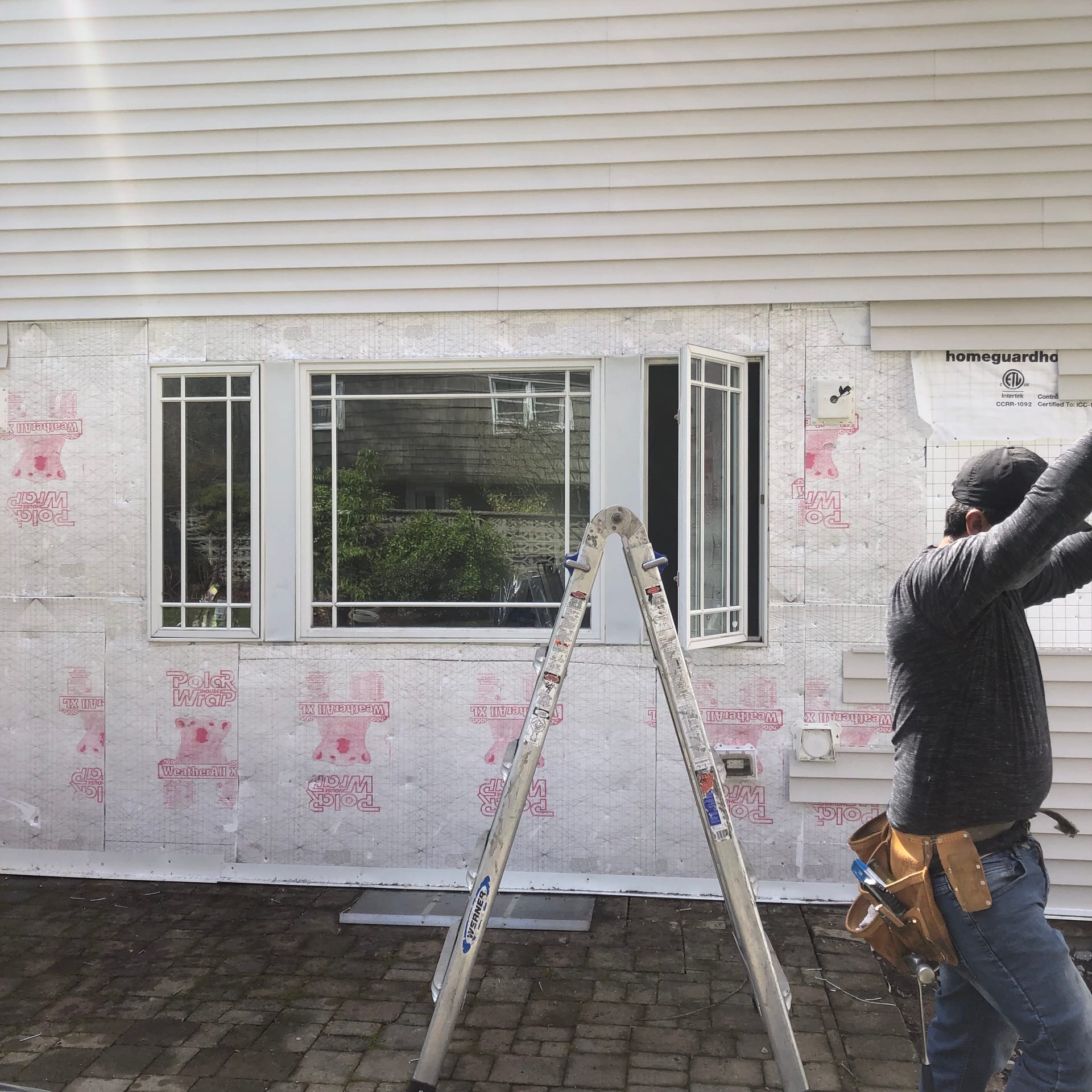
If the sheathing is damp from driving rain or snow melt, pause. Trapping moisture behind new siding invites rot and mold.
Use the gentle touch on locks and starts
Cold locks are stiffer. Start strips must be dead level, and panels should be eased, never forced, into place to avoid hairline fractures you will not notice until the next thaw.
What is the cold-day installation checklist?
- Confirm forecast: daytime highs mid-30s or warmer for at least 2 to 3 days.
- Inspect sheathing and housewrap: bone dry, no ice, no visible staining.
- Stage materials warm; swap panels in small batches.
- Cut slow with sharp blades; support the cut line fully.
- Hand nail or light-gun with slip room. Never pin tight.
- Leave winter-appropriate expansion gaps per manufacturer.
- Seal and flash penetrations meticulously; spot-check every elevation.
When should you wait until spring?
Sometimes the smartest move is to hold the job rather than rush panels onto a wet wall.
- Extended deep-freeze ahead: If the 10-day forecast shows sub-freezing highs and single-digit nights, panels are too brittle, and adhesives and flashings will not cure right.
- Ice on sheathing or recent soaking: After a nor'easter, the sheathing can hold moisture. If it is damp or stained, let it dry out. Installing over wet substrates traps problems you will pay for later.
- Structural or water-intrusion repairs needed: If you find spongy sheathing, mold, or failed flashing around windows and doors, those repairs take precedence. Warmer, drying weather makes them safer and longer lasting.
- High-wind patterns: Repeated coastal gusts along the Hudson waterfront can fight you every step. Waiting for a calmer window or spring may produce a far cleaner result.
Repair or replace before the next freeze?
After the first cold snap, lots of colonials and Cape Cods from the 1960s to 1990s show their age. How do you tell if a quick repair is fine or if a full elevation replacement will actually save money?
Choose repair if
- Damage is localized, say a few cracked or loose panels on the west elevation.
- Less than 10% of an elevation is affected.
- No signs of moisture infiltration: no musty odor, no dark staining on sheathing, no swollen trim.
- Drafts are coming from a single corner or piece of trim, not across whole walls.
- Your siding is otherwise younger, and color matching is possible.
Consider full elevation replacement if
- Multiple elevations are brittle, warped, or rattling after every nor'easter.
- You see buckling or nail pops across long runs, often a sign of past over-nailing or zero expansion gap.
- Heating bills jump, walls feel cold, and you can trace drafts along entire walls or around many windows and doors.
- There is evidence of moisture behind the siding: staining, soft sheathing, recurring mildew on the interior, or pest activity.
- Your siding is 25 to 35 years old (common on 1980s and 1990s installs), severely faded, or no longer supported by manufacturer accessories.
- You are planning window or roof upgrades. Bundling with new siding improves flashing continuity and long-term weatherproofing.
A quick real-world scenario
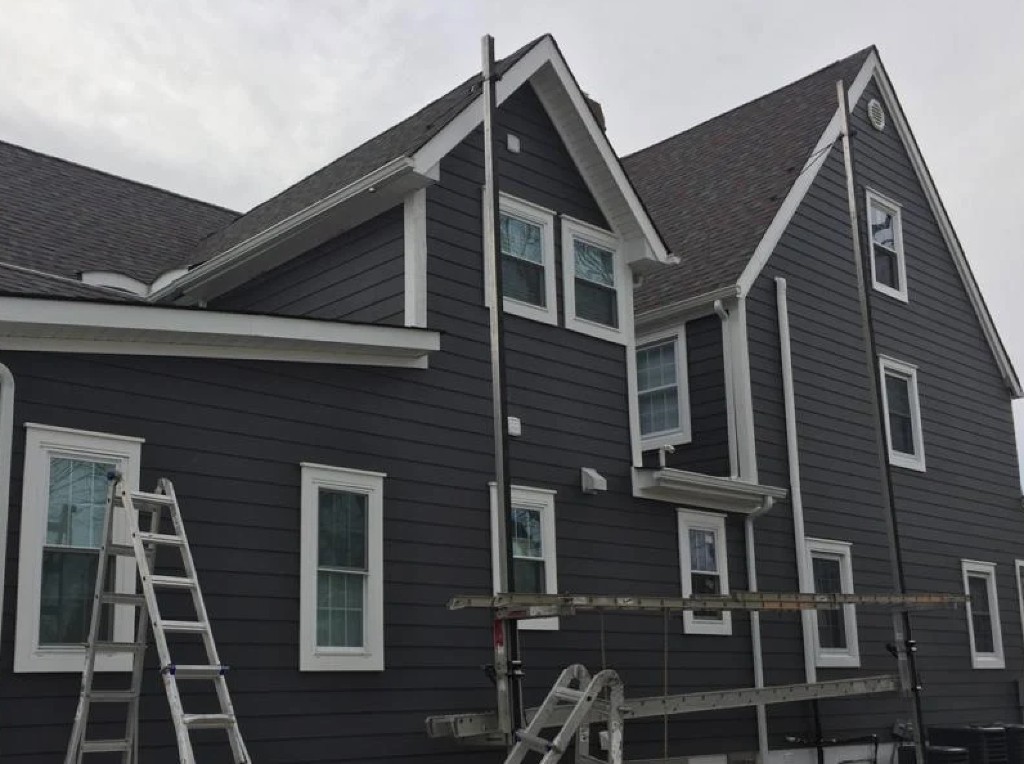
A raised ranch in Morris County loses three panels in a wind event. The sheathing is dry, and the rest of the elevation is solid. Repair it, no need to go bigger. But a Passaic County split-level with brittle panels across two elevations, visible buckles, and indoor wall staining? That is replacement territory before the next deep freeze makes things worse.
Go deeper
Companion guides and FAQ
More from the blog
Related articles

Common questions
Quick answers
Below freezing is risky for cutting and locking panels. NJ Vinyl Siding targets mid-30s or warmer daytime highs for installs. Hand nailing, proper expansion gaps, and dry sheathing matter as much as the thermometer reading.
Request a quote for winter siding work
Winter does not have to stall your siding plans in New Jersey. NJ Vinyl Siding helps you decide whether a targeted repair or a full elevation replacement makes the most sense for your home and budget. Request a quote at /contact, call (973) 487-3704, or visit /es for Spanish.