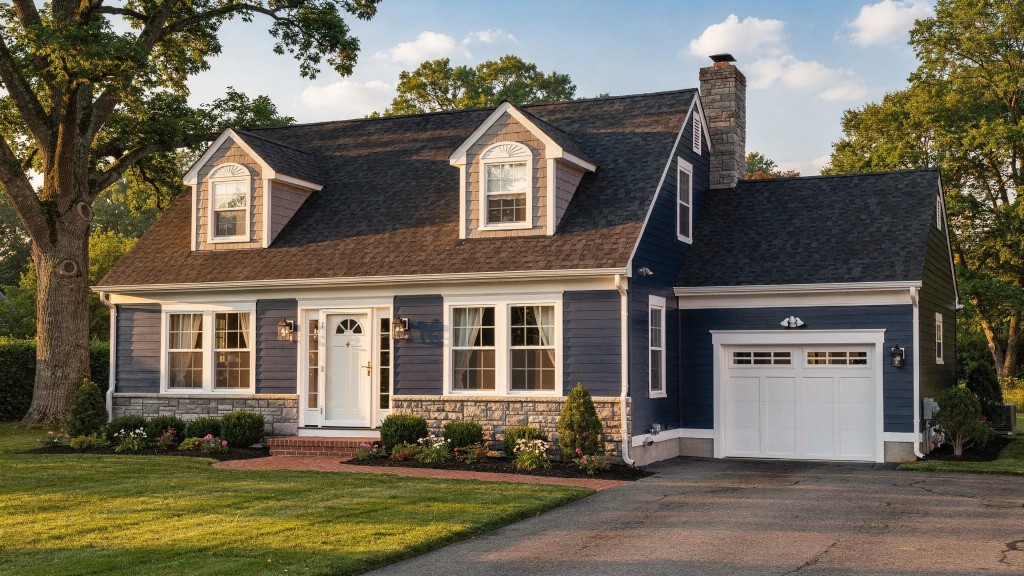
Storm and wind
How nor'easters and wind-driven rain test NJ siding, and the install details that matter.
When nor'easters push 40-70 mph gusts across the Shore, Raritan Bay, and North Jersey lake communities, siding takes the hit: uplift at open gables, water forced behind trim, and salt that corrodes fasteners. This guide shows the installation details that protect your home from wind-driven rain without duplicating deep moisture/insulation topics.
9 min read
40-70 mph
Nor'easter gusts
Shore and bays
Kick-out
Flashing
Wind-driven rain
316
Stainless
Salt-air zones
72 hr
Inspect goal
After major storm
Key takeaway
Nor'easters expose weak install details: open gables without backing, loose rake trim, missing kick-out flashing, and carbon-steel fasteners in salt-air zones. NJ Vinyl Siding specs VSI nailing, stainless hardware near bays and oceans, and wind-driven rain flashing on Shore capes, Raritan Bayshore towns, and lakefront homes from Hopatcong to Greenwood Lake.
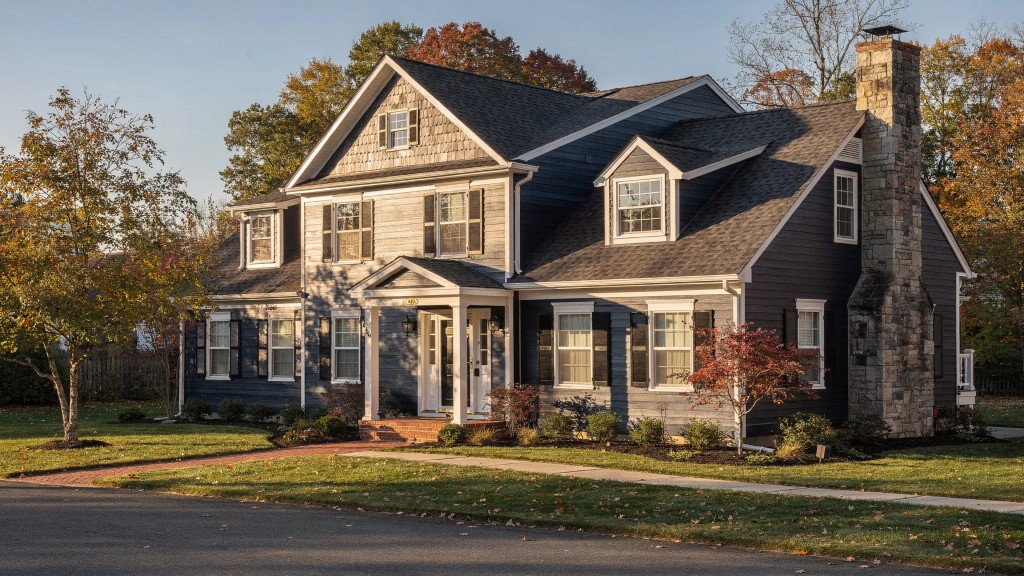
Open gables: tame the wind at the most exposed edges
Open gables catch the full force of nor'easter winds. Panels at the rake edge can lift when nailing is sparse, backing is thin, or vents create a pressure path into the attic.
NJ Vinyl Siding follows VSI nailing schedules on gable walls, adds solid backing at panel ends, and coordinates soffit and ridge vent layout so wind does not pull siding loose at the peak.
- Solid wood or plywood backing at gable edges per manufacturer spec
- Nail every 12-16 inches in the nailing zone, not just field spacing
- Lock panel ends with J-channel, rake trim, or frieze before wind season
- Control vent openings so uplift does not bypass the siding plane
- Cape and shore profiles: /guides/cape-cod-shore-siding-nj
Rake trim that won't lift
Rake boards and aluminum cap take direct wind on every gable wall. Trim that floats over foam or loose substrate will peel back under sustained gusts.
NJ Vinyl Siding fastens rake trim through solid substrate, interlocks cap with drip edge at the roof line, and uses sealant only where the profile calls for it, not as a substitute for mechanical fastening.
- Substrate: replace soft sheathing before trim goes on
- Interlock rake cap with roof drip edge and siding J-channel
- Mechanical fasteners every 12 inches on exposed rake runs
- Sealant at end joints only, not across full trim lengths
- Match trim thickness to panel profile so wind cannot catch an edge
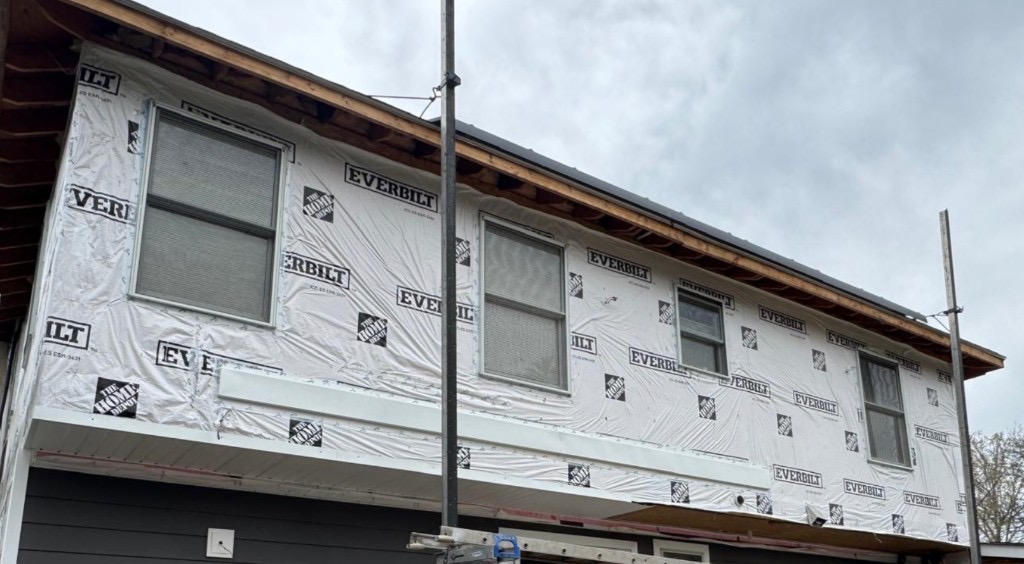
Kick-out flashing that stops wind-driven rain
Wind-driven rain travels uphill along roof-wall joints and dumps behind siding where kick-out diverters are missing. Gutters that look fine from the ground do not stop water forced sideways at 50 mph.
NJ Vinyl Siding installs kick-out flashing with correct leg dimensions, integrates it with housewrap and step flashing, and places diverters where roof lines meet sidewalls on capes and two-story walls.
- Minimum 4-inch vertical leg and 2-inch horizontal return at roof-wall joints
- Shingle-lap housewrap over kick-out flange before siding locks in
- Step flashing tied to kick-out at every eave-to-wall transition
- Durable placement: not pinched behind loose J-channel
- Deeper moisture and WRB topics: /guides/siding-insulation-moisture-nj
NJ coastal siding fasteners: go stainless where salt travels
Salt from ocean spray, Raritan Bay fog, and lake wind carries miles inland. Carbon-steel nails rust, stain panels, and lose holding power within a few storm seasons.
NJ Vinyl Siding specs 316 stainless within a few miles of open water and bays, 304 stainless on inland lake communities, ring-shank nails for uplift resistance, and correct shank clearance for panel expansion.
- 316 stainless within roughly 3 miles of ocean, bay, or heavy salt spray
- 304 stainless on Hopatcong, Greenwood Lake, and inland lakefront walls
- Ring-shank nails for uplift resistance on gable and rake walls
- Shank diameter and length per manufacturer nailing zone chart
- Compatibility: stainless with aluminum trim needs isolation where required
- Do not mix galvanized and stainless on the same wall plane
Repair vs full elevation replacement after a storm
A nor'easter may blow off a few panels while the rest of the wall is sound, or it may expose rot and failed wrap behind an entire elevation. The right call depends on substrate condition, not just panel count.
NJ Vinyl Siding documents damage with photos for insurance when needed and quotes repair or full elevation replacement with clear ROI so you do not patch twice in the same season.
- Lean repair when: 1-3 panels failed, dry sheathing, intact wrap, matching profile in stock
- Go full elevation when: soft sheathing, stained interior walls, missing kick-outs, or repeat blow-offs
- Insurance tip: photograph all elevations and note date/time before temporary tarps go on
- ROI: full elevation with correct flashing often costs less than three storm repair calls in five years
- Storm repair guide: /guides/siding-repair-nj
Fast help along the Shore, Raritan Bay, and North Jersey lakes
Monmouth County capes in Long Branch, Red Bank, and Middletown see direct Atlantic fetch. Raritan Bayshore towns from Keyport to South Amboy get wind-driven rain off the bay. Lake communities around Hopatcong and Greenwood Lake see gusts off open water with less salt but full uplift.
NJ Vinyl Siding schedules storm-siding checks after major weather events and quotes repair or replacement with the same crew that handles full vinyl installs across North and Central Jersey.
- Monmouth County: capes, colonials, and split-levels along the Shore
- Raritan Bayshore: wind-driven rain at roof-wall joints on older ranches
- Hopatcong and Greenwood Lake: lake gusts, 304 stainless, open gable restraint
- Photo quotes for blown-off panels: upload wide shots and close-ups
- Request a storm check: /contact or call (973) 487-3704
Common questions
Nor'easter siding FAQ
Quality vinyl siding installed to VSI standards handles sustained winds in the 60-110 mph range depending on panel profile and exposure rating. Nor'easter gusts of 40-70 mph rarely fail the panel itself. Failures usually trace to loose rake trim, missed nails at gables, or wind-driven rain behind unflashed joints. NJ Vinyl Siding inspects those details after major storms.
Schedule a storm-siding check today
Call or text (973) 487-3704, or send storm-damage photos for a written repair or replacement scope. Request an estimate at /contact. NJ Vinyl Siding serves Monmouth County, the Raritan Bayshore, and North Jersey lake communities.