Homeowner planning
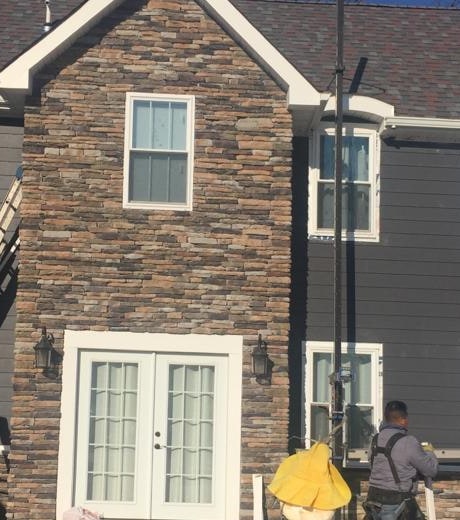
Real wood accents on the front elevation read natural when field walls stay low-maintenance.
Thermally modified lumber, cedar, and preserved wood cladding on porticos, entry walls, and gables pair with vinyl, Ascend, or James Hardie on the rest of the house. NJ Vinyl Siding plans accent zones and field siding on one written contract.
8 min read
1
Front elevation plan
Wood zone + field siding
3+
Wood categories
Thermal, cedar, treated
6
Combo recipes
Portico to gable
1
Written contract
Accent + cladding
Key takeaway
Thermally modified lumber, cedar, and preserved wood cladding on porticos, entry walls, and gables pair with vinyl, Ascend, or James Hardie on the rest of the house.
Real wood accents vs wood-look composite
Wood-look vinyl, Ascend composite, and James Hardie fiber cement deliver grain and color without lumber maintenance. Real wood accents use actual boards or shingles on a limited zone: front gable, entry surround, portico ceiling, or column wraps.
Most North Jersey homeowners choose real wood where they want authentic color variation, rustic texture, or a warm honey-to-brown tone that reads from the curb. Field walls stay on vinyl, Ascend, or Hardie for budget and upkeep balance.
NJ Vinyl Siding separates these lanes in your written proposal so you know which walls are lumber and which are composite or vinyl before materials are ordered.
- Wood-look composite: factory grain and color, no stain schedule on most lines
- Real wood accent: natural tone, rustic or smooth face, limited maintenance zone
- Typical split: wood on front entry or gable, composite on sides and rear
- See our premium vinyl and Ascend guides for full-house wood-grain options
Where wood belongs on a North Jersey facade
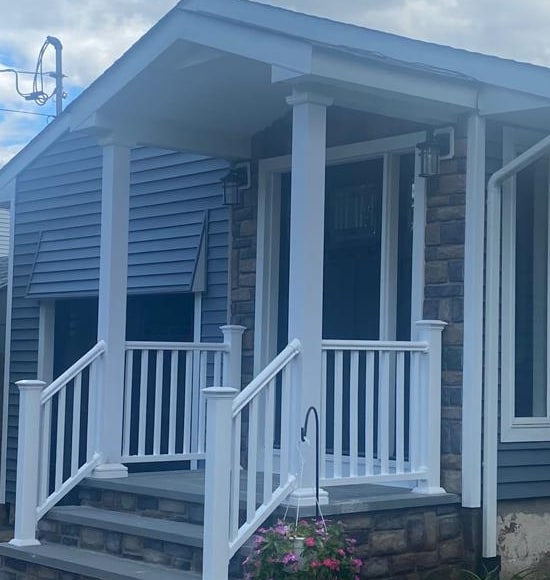
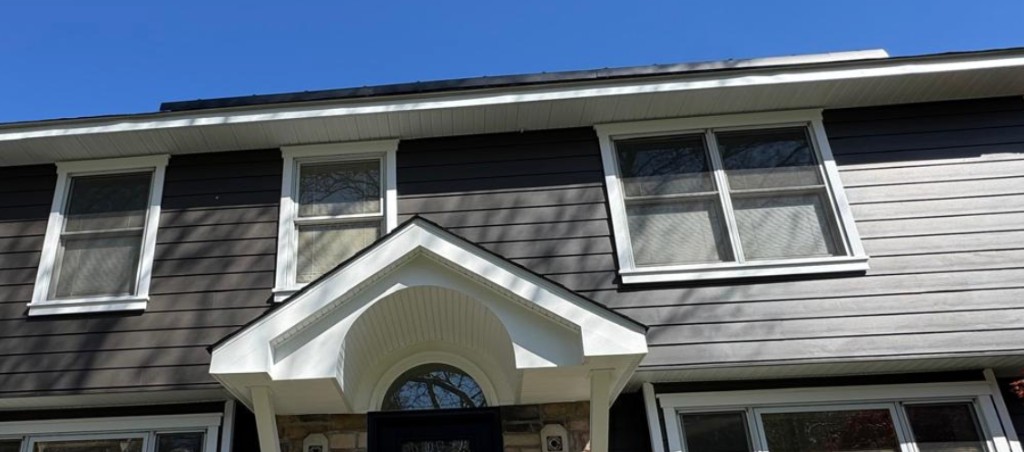
Full-house wood cladding is rare on Bergen and Essex colonials. Accent wood performs best where visitors see it first: portico posts and cheeks, front gable triangles, entry tower walls, and porch ceilings.
NJ Vinyl Siding maps each wood zone on your elevation sketch before tear-off so flashing, trim, and field panel courses line up at transitions.
- Portico and porch: column wraps, knee walls, beam faces, tongue-and-groove ceilings
- Front gable: vertical or shake wood above lap or composite field walls
- Entry surround: wood panels flanking the front door between stone or siding
- Chimney chase accents: wood or shake zones with proper clearances to roof
Rustic vs smooth wood profiles
Rustic profiles include wire-brushed, rough-sawn, and heavily textured faces that hide minor wear. Smooth clear vertical grain reads modern and pairs with black window trim on farmhouse and contemporary entries.
Vertical board-and-batten wood on a front gable contrasts horizontal lap on field walls. Horizontal shiplap or clapboard on an entry wall softens colonials next to stone water tables.
NJ Vinyl Siding sources profile samples through regional distributors so you compare rustic and smooth faces in natural light at your driveway.
- Rustic: wire-brush, rough-sawn, reclaimed-look faces; forgiving on wooded lots
- Smooth: clear grain, modern entries, black trim, large glass doors
- Vertical B&B wood: strong on front gables and farmhouse entries
- Shake or shingle wood: Tudor bays and craftsman gable accents
Preserved and modified wood types
Thermally modified wood is kiln-heated to improve stability and moisture resistance without chemical treatment on many product lines. It holds warm brown tones and suits accent walls and soffit ceilings in North Jersey freeze-thaw cycles when detailed with proper rain screen and flashing.
Acetylated wood such as Accoya uses a treatment that reduces swelling and rot risk. It accepts paint well and fits column wraps, window surrounds, and trim-heavy porticos.
Kebony and similar modified softwoods deliver dark, modern tones on vertical accent strips. Western red cedar remains the classic portico and gable choice when homeowners accept periodic stain or clear coat on exposed faces.
NJ Vinyl Siding specifies the wood category and manufacturer line in your proposal. Product availability varies by distributor; we confirm lead times before you sign.
- Thermally modified: heat-treated stability, warm browns, accent walls
- Acetylated (Accoya): dimensionally stable, paintable, premium trim and posts
- Modified softwood (Kebony-type): dark modern accents, vertical strips
- Natural cedar: classic look, stain or clear coat on exposed faces
- Always detail flashing, air gap, and end-grain seal at openings
Six front elevation combo recipes
These layouts appear on Ridgewood, Wayne, and Montclair streets where owners want warmth at the entry without wood on every elevation. Rear and side walls often stay vinyl or composite to control cost.
NJ Vinyl Siding prices each zone separately in your written proposal: field cladding, wood accent, stone, and shared flashing labor.
- Modern entry: gray Ascend or navy vinyl field + vertical thermowood on front + black anodized trim
- Craftsman portico: Hardie lap field + cedar posts and wood porch ceiling + white PVC trim
- Stone and wood: vinyl lap sides + cultured stone water table + wood entry wall at the door
- Farmhouse front: white MainStreet lap + wood board-and-batten on front only + shake gable accent
- Portico focus: matching composite field + wood column wraps + stone column bases
- Tudor bay: vinyl lap field + cedar shake on second-story bay + stone at grade
Maintenance, cost, and when wood is worth it
Even thermally modified and acetylated wood may need oil, stain, or clear coat on south-facing accents every few years. Budget for touch-ups at end grain, posts, and horizontal surfaces where water sits.
Real wood accents cost more per square foot than vinyl or composite field walls but less than wrapping the entire house in lumber. The ROI is curb appeal at the front door and resale photos, not zero maintenance.
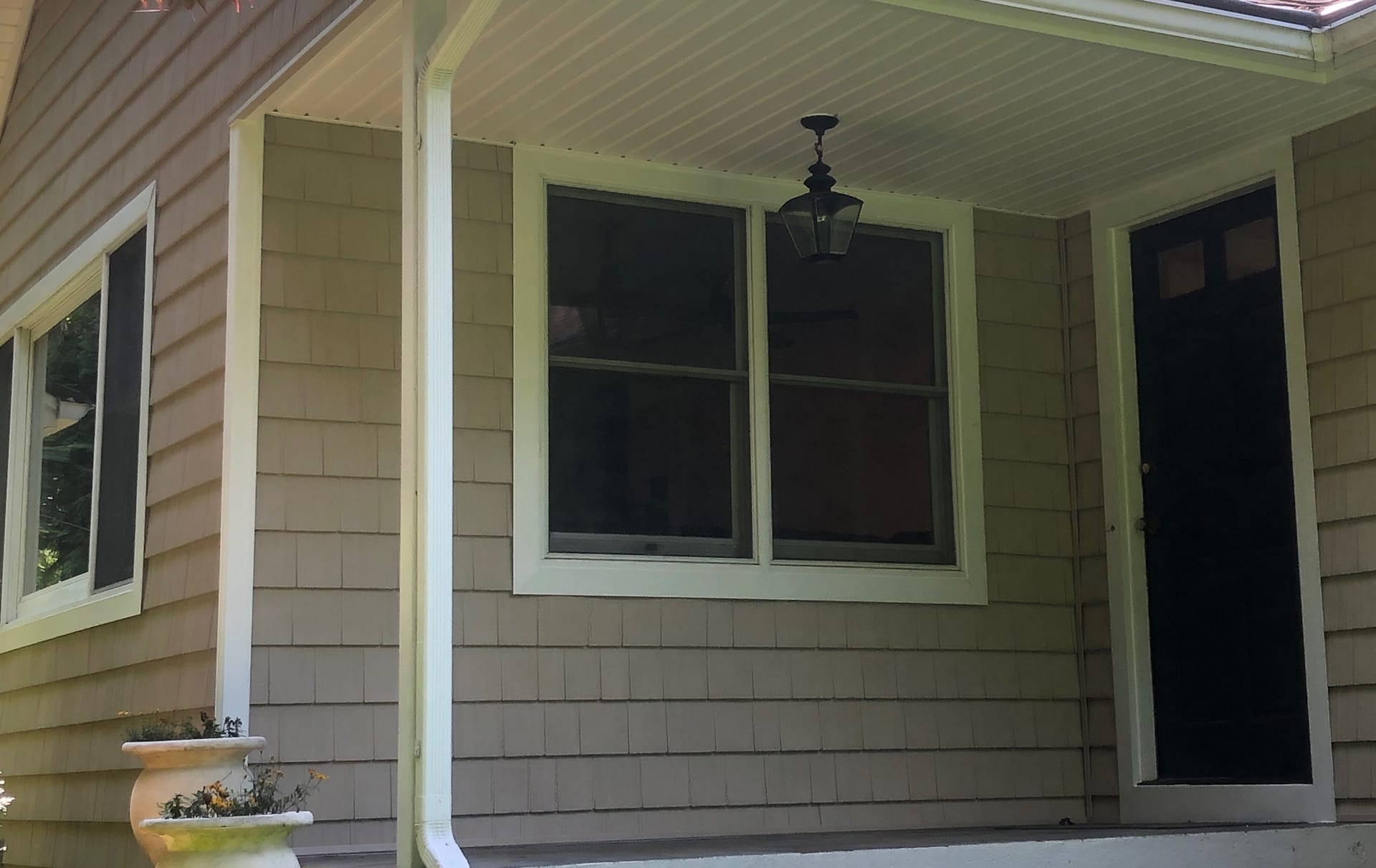
When maintenance is the top priority, Ascend Cedar Mill in Flagship Brown or Rustic Timber, or Cedar Impressions shake in Weathered Wood, delivers wood tone without a stain schedule. NJ Vinyl Siding compares both paths with physical samples.
- Wood accent: premium material + skilled trim carpentry at transitions
- Composite wood-look: lower upkeep on the same elevation layout
- Plan wood on front only to balance budget and impact
- Bundle portico, stone, and siding on one contract for one flashing plan
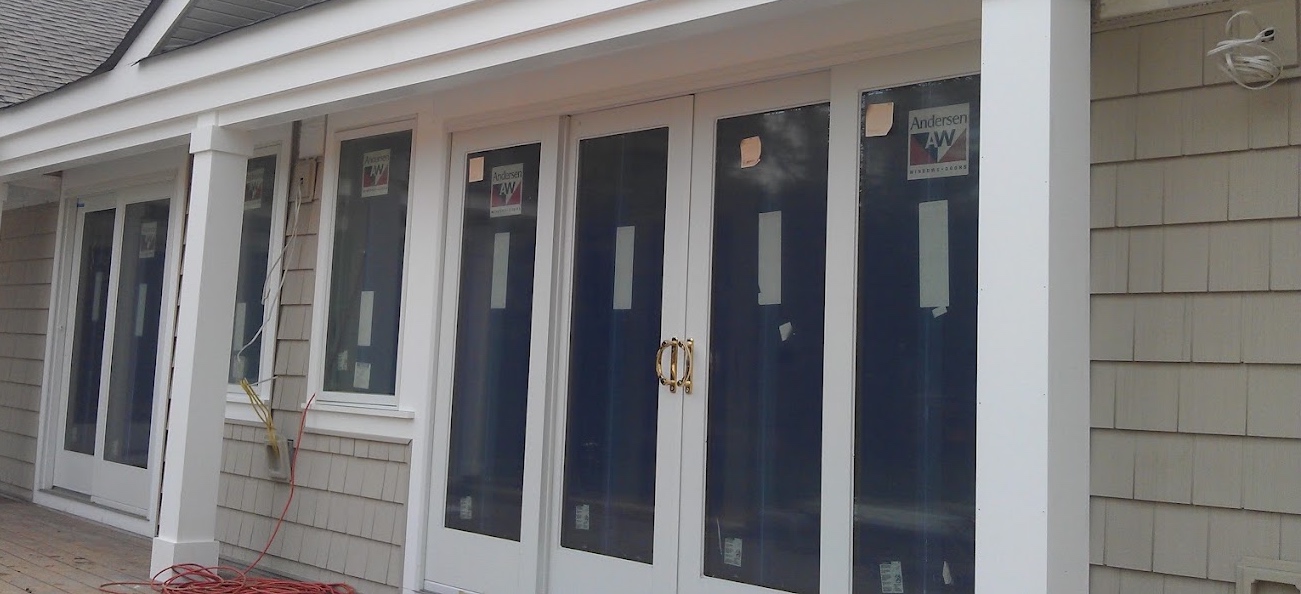
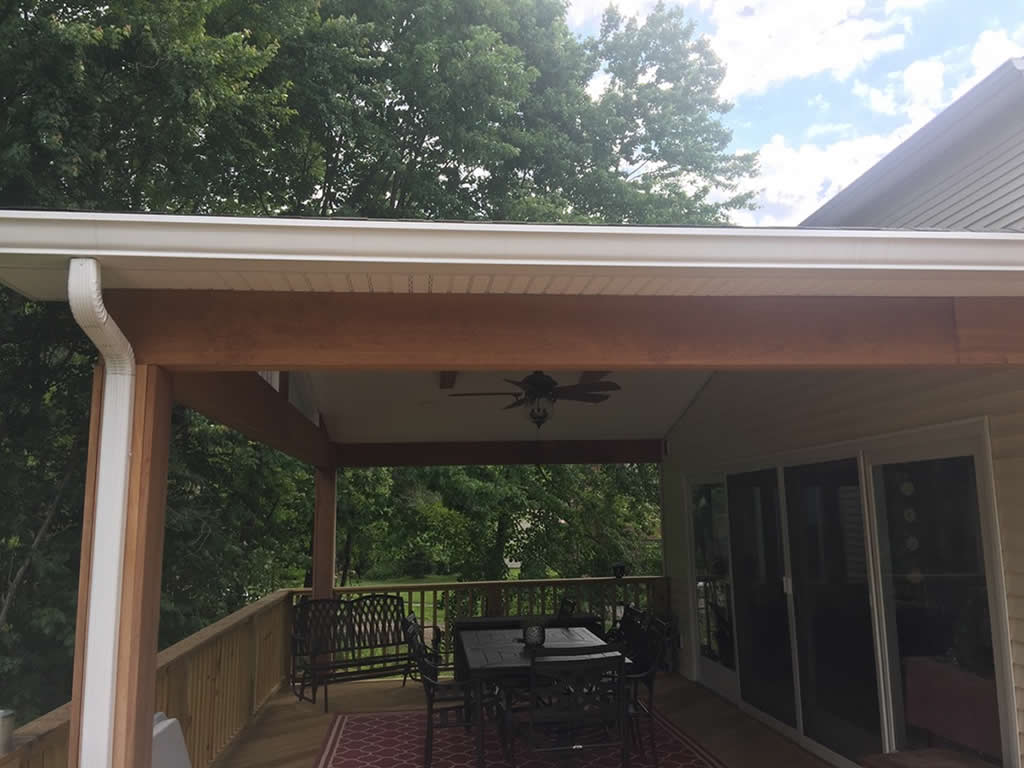
Job photos
Combo inspiration (representative layouts)
Side-by-side at a glance
| Topic | Real wood accent | Wood-look composite |
|---|---|---|
| Material | Thermowood, cedar, acetylated lumber | Vinyl shake, Ascend, Hardie grain |
| Color | Natural browns, honey, weathered tones | Factory colors and stains |
| Best zone | Portico, front gable, entry wall | Full walls and large gables |
| Maintenance | Stain or oil on exposed faces | Wash and inspect; no stain on most lines |
| Cost | Higher per sf on accent zones | Lower on large field areas |
| When to choose | Authentic warmth at the entry | Low upkeep whole-home refresh |
Common questions
Wood accent siding FAQ
Yes. Front gables, entry walls, portico cheeks, and porch ceilings are the most common wood accent zones on North Jersey homes. Field walls on sides and rear stay vinyl, Ascend, or James Hardie for budget and maintenance balance. NJ Vinyl Siding maps each zone on your written proposal.
Plan a wood accent on your front elevation
NJ Vinyl Siding brings wood samples, siding color decks, and elevation sketches to your free estimate. One fixed-price proposal for accent cladding and field panels.