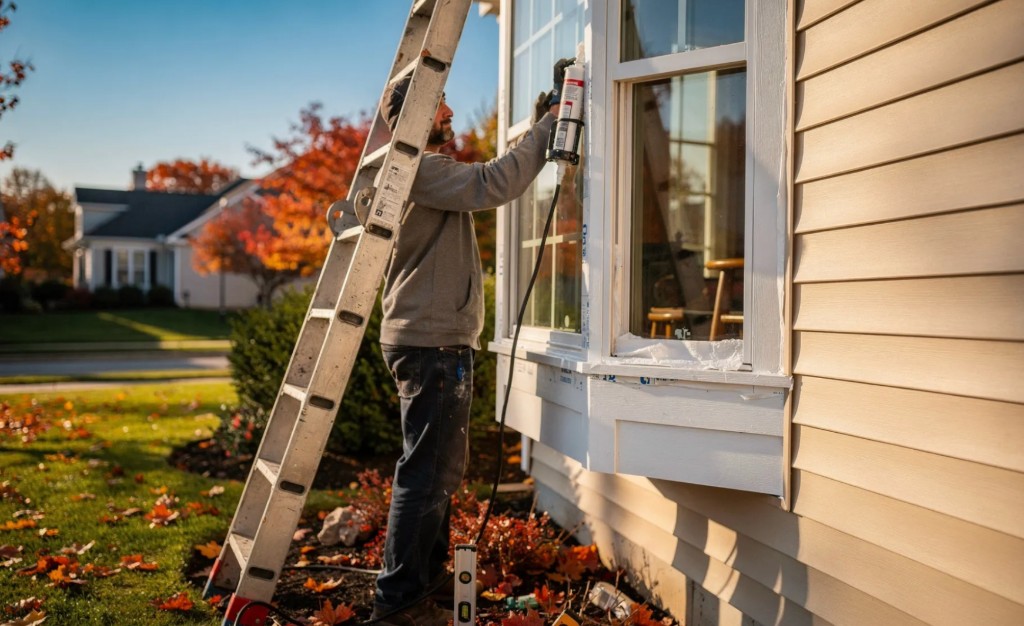
Window planning
September and October are your last comfortable window to replace drafty glass before North Jersey cold snaps backlog crews and freeze caulk lines.
Fall window replacement in North Jersey works best in September and October when daytime temps stay above 40°F, caulk can cure, and crews still have outdoor hours before holiday backlog. Wait until after the first hard cold snap and you risk delayed schedules, rushed exterior seals, and another winter of drafts at the sash.
8 min read
Sept–Oct
Sweet-spot months
Before sustained cold
40°F+
Caulk cure floor
Exterior sealant temps
4–8 wks
Fall crew backlog
After first freeze
23+
Years in North Jersey
Window installs since 2003
Key takeaway
Fall window replacement in North Jersey works best in September and October when daytime temps stay above 40°F, caulk can cure, and crews still have outdoor hours before holiday backlog.
What you will learn from this guide
- Why September and October beat late fall and winter for North Jersey window replacement
- How temperature, daylight, and crew capacity line up in the Sept–Oct sweet spot
- Why exterior caulk and sealant temperature limits matter at the wall line
- What happens to installer schedules after the first cold snap
- Which drafty window types to prioritize: double-hung, bay, bow, and picture units
- A pre-Thanksgiving step-by-step plan so your home is sealed before winter
- ROI and comfort wins you feel the first cold night after install
Temperature, daylight, and crew capacity: the Sept–Oct sweet spot
North Jersey sits in a narrow fall window where outdoor work still makes sense. Daytime highs in September and early October usually land in the 60s and 70s. Crews can work full days without rushing interior openings shut at 4 p.m.
By mid-November, sunset creeps toward 4:30 p.m. and overnight lows dip below freezing more often. That shortens install days and pushes exterior seal work into marginal weather.
Crew capacity follows the same curve. Late summer and early fall are busy but still bookable. After the first sustained cold snap, many homeowners who put off summer work flood the schedule. NJ Vinyl Siding tracks lead times weekly across Bergen, Essex, Union, Morris, and Passaic counties so you know whether your openings can still finish before Thanksgiving.
- September: warm days, dry weeks, and enough daylight for multi-opening jobs
- Early October: still workable for full-frame replacements with new flashing
- Mid-October onward: exterior sealant cure gets tighter; plan fewer openings per day
- Late November: holiday backlog plus short days stretch every job
- Winter installs happen, but expect tenting, heat guns, and schedule risk
Why caulk and sealant temperature limits matter
A window replacement is only as good as the seal at the frame. Sill pan flashing, head tape, backer rod, and paintable exterior caulk all need workable temperatures to bond and cure.
Most exterior sealants need air and substrate temps above 40°F during application and for 24 to 72 hours after. Below that, caulk skins over slowly, shrinks unevenly, or never fully adheres. You get gaps that show up as drafts by January.
NJ Vinyl Siding specs sealant by manufacturer data sheet, not guesswork. We install double-hung, casement, sliding, picture, bay, and bow windows with sill pan flashing, head tape, and custom aluminum capping at every opening. Fall gives us the temperature band to do that work right at the wall line.
- 40°F floor: common minimum for silicone and polyurethane exterior caulk
- Frost on siding or trim: wipe and dry the substrate before any sealant goes on
- Rain within 24 hours: can wash uncured caulk off head flashing and sill pans
- Heat guns in winter: a backup, not a substitute for a fall install window
- Interior foam: can go in cooler temps, but exterior air seal still needs dry, warm-enough days
Installer schedules after the cold snap
The first week everyone feels winter in North Jersey, phone volume jumps. Homeowners who ignored drafts all summer suddenly want every opening done before the holidays.
That backlog hits three places at once: crew calendars, factory lead times, and inspection slots. A job that books in September often measures in two weeks and installs in four to six. The same scope started in late November can stretch eight to twelve weeks with holiday closures layered on top.
Manufacturers commonly spec Pella, Andersen, Marvin, Harvey, and Simonton lines named on your written proposal. Lead times widen in Q4 even when the glass package is in stock, because freight and staging slow around Thanksgiving and year-end.
NJ Vinyl Siding is not an authorized dealer for any brand unless stated in writing. We do quote install-only labor for customer-supplied units from Home Depot or Lowe's, but fall scheduling still follows the same crew and weather curve.
- Early fall: 2 to 4 week measure-to-start on typical whole-home jobs
- After first freeze: 4 to 8 week backlogs are common on quality crews
- Holiday weeks: shortened install days and delayed inspections
- Bay and bow units: add structure and roof-cap time; book earlier in fall
- Siding bundles: combining windows with vinyl replacement needs one coordinated schedule
Drafty window types to fix before winter
Not every opening fails the same way. Fall is the right time to triage which units steal heat and which can wait until a siding bundle next year.
NJ Vinyl Siding photographs each opening at the estimate so you see the same failed head flashing, soft sill, or fogged glass we do. Manufacturer and model are named line-by-line on your written proposal.
- Double-hung: failed balances, worn weatherstripping, and fogged IGUs are the top fall complaints on colonials and capes
- Bay windows: three-panel projections leak at the roof cap and sill knee wall; full-frame with new flashing beats another caulk band-aid
- Bow windows: curved four-plus panel units need careful head cap and cable or knee-brace support; cold months make exterior trim work harder
- Picture windows: fixed glass hides seal failure until condensation streaks the pane; insert replacements skip rot repair at the sill
- Sliding and casement units: track wear and operator failure show up as hard-to-close sashes and noticeable drafts at the meeting rail
Your pre-Thanksgiving game plan
If you want new glass sealed before guests arrive and before January wind finds every gap, work backward from Thanksgiving week. NJ Vinyl Siding builds this timeline into your written proposal after an on-site measure.
- Week 1: Request a photo quote or on-site measure. List drafty rooms, fogged panes, and any bay or bow units that feel cold at the seat board
- Week 2: Review the written proposal. Confirm insert vs full-frame per opening, glass package, sill pan scope, and aluminum capping color
- Week 3: Sign and order. Long-lead bay and bow configurations go first; standard double-hungs and sliders usually move faster
- Weeks 4–6: Install while daytime temps support exterior sealant. Plan one room at a time if you need overnight heat
- Before Thanksgiving: Final exterior caulk cure, interior trim touch-up, and haul-away of old units
- After install: Run bath fans and check humidity (see below) so you do not mistake condensation for a defective window
ROI and comfort wins you feel the first cold night
Replacement windows are not only about next April's energy bill. The payback shows up the first night you stop feeling a cold river of air at the sash.
Insulated glass with Low-E coating cuts heat loss through the pane. Proper sill pan flashing and head tape stop air infiltration at the frame, which is where most older North Jersey units actually leak.
Tighter windows can qualify for the federal 25C tax credit on qualifying product cost when you file. See our Energy Star rebates guide for paperwork and caps. NJ Vinyl Siding splits product and labor on written proposals but does not guarantee tax outcomes.
Comfort ROI is immediate: fewer drafty seats, less condensation on single-pane leftovers in secondary rooms, and less crank heat to keep the living room usable.
- Draft reduction: full-frame with new flashing fixes what caulk cannot at failed head and sill details
- Noise: double-pane Low-E helps on street-facing bedrooms in Teaneck, Fort Lee, and Ridgewood
- Curb appeal: new capping and trim before the holidays shows up in listing photos if you sell next spring
- Bundle timing: pairing windows with vinyl siding in fall coordinates one scaffold pass and one crew calendar
- Energy Star glass: spec by orientation; south and west rooms may need lower SHGC than north bedrooms
Humidity: the post-install detail homeowners miss
New tight windows can reveal indoor moisture problems that old leaky units masked. If you seal every opening in October and skip ventilation, you may see condensation on glass corners by December.
That is often humidity, not a defective unit. North Jersey homes run dry heat all winter. Cooking, showers, and whole-house humidifiers push moisture against cold glass at night.
Run bath fans 20 minutes after showers. Keep indoor relative humidity near 30 to 40% when outdoor temps drop below freezing. If streaks persist on center glass between panes, that is seal failure and warrants a warranty call.
NJ Vinyl Siding reviews ventilation habits during the walk-through so you know what normal post-install condensation looks like versus a true IGU failure.
Book fall installs while the weather still cooperates
September and October are your last comfortable chance to replace drafty windows in North Jersey before crew backlogs, short daylight, and caulk temperature limits stack against you.
NJ Vinyl Siding installs across Bergen, Essex, Union, Morris, and Passaic counties with sill pan flashing, head tape, and on-site aluminum capping at every opening. Request a photo quote or on-site measure and we will map a pre-Thanksgiving schedule on one written proposal.
Common questions
Is September the best time to replace windows?
September is one of the best months for fall window replacement in North Jersey. Daytime temps usually stay above 40°F, exterior caulk can cure, and crews still have full outdoor hours. Early October works too. After the first sustained cold snap, backlogs grow and exterior seal work gets harder.
Book a fall window measure before the cold snap
NJ Vinyl Siding measures every opening, documents sill pan and head flashing needs, and schedules installs while September and October weather still lets exterior sealant cure. Request a photo quote and we will map your pre-Thanksgiving timeline on one written proposal.