Window planning
Before you sign for Energy Star windows in NJ, verify the 25C credit, rebates, and every line on your contractor quote.
Before signing for Energy Star windows in NJ in 2026, verify the federal Energy Efficient Home Improvement Credit (25C) up to $600 for qualifying windows, any active NJ Clean Energy or utility rebates or 0% financing, and program pre-approvals. On the quote, require exact window specs with NFRC ratings, installation scope, warranties, permits, and a clear price breakdown.
9 min read
$600
25C window cap
Per tax year, product cost
$1,200
Envelope cap
Windows + doors annual max
30%
Federal 25C credit
Qualifying product cost
23+
Years in North Jersey
Window installs since 2003
Key takeaway
Before signing for Energy Star windows in NJ in 2026, verify the federal Energy Efficient Home Improvement Credit (25C) up to $600 for qualifying windows, any active NJ Clean Energy or utility rebates or 0% financing, and program pre-approvals.
What you will learn from this guide
- Which 2026 rebates and tax credits to confirm for Energy Star windows in New Jersey
- How to quickly verify eligibility with documents that actually matter
- A line-by-line checklist for what must appear on a window replacement quote
- Common pitfalls NJ homeowners run into and how to avoid them
- How to stack incentives without derailing your schedule
Start with the money you can actually bank on in 2026
Short version: the surest incentive for Energy Star windows in NJ is the federal 25C tax credit. New Jersey statewide rebates for windows alone are rare, but utility programs and whole-home paths can help when active.
Programs change. Verify every credit and rebate at quote time and again at tax filing. NJ Vinyl Siding splits product and labor on written proposals so you have the paperwork 25C needs, but we do not guarantee tax outcomes.
- Federal 25C tax credit: 30% of product cost for qualifying exterior windows and skylights, capped at $600 per year; doors are $250 each, up to $500; total annual envelope cap is $1,200. Product cost only. Installation labor does not count. Keep receipts split by materials vs labor.
- Eligibility: windows must meet current ENERGY STAR certification for your ZIP and IRS criteria. Keep the manufacturer's certification statement.
- NJ Clean Energy Program (NJCEP): typically emphasizes whole-home performance (air sealing, insulation, HVAC). Windows may count toward modeled savings in Home Performance with ENERGY STAR or DOE HOMES pathways if active. Ask for pre-approval before installation.
- Utility incentives and financing: PSE&G, JCP&L, Atlantic City Electric, Orange and Rockland, New Jersey Natural Gas (SAVEGREEN), and Elizabethtown Gas often offer 0% or low-interest financing and whole-home rebates. Window-only rebates are uncommon. Financing is more likely.
- Stacking: many programs allow stacking with 25C, but rules vary and caps apply. Confirm in writing whether rebates will be reduced if you also take a tax credit.
How to verify eligibility fast
Think of this like checking a boarding pass. Three quick scans and you are clear.
NJ Vinyl Siding provides manufacturer certification statements, NFRC label data, and product-vs-labor splits on written proposals. We commonly spec Pella, Andersen, Marvin, Harvey, and Simonton lines named line-by-line on the quote. We are not an authorized dealer for any brand unless stated in writing.
- Ask for documents up front: manufacturer certification statement for IRS (25C), NFRC label data (U-factor and SHGC) for the exact glass package, and ENERGY STAR 7.0 compliance for your ZIP in NJ
- Confirm the credit basics: does the quote break out product vs labor for 25C, and is installation scheduled in the same tax year you plan to claim the credit
- Check NJ program status: ask if the contractor participates in NJCEP or utility programs. For whole-home rebates or DOE HOMES, request a modeled savings report and written pre-approval before you order windows
- Keep a tidy file: signed contract, proof of payment, product-only invoice, NFRC labels (snap photos before removal), certification statement, and any rebate pre-approvals
The quote checklist: product specifics
If it is not on the quote, assume it is not included. Here is the punch list seasoned inspectors love.
- Manufacturer, series, and exact model numbers for each unit
- Glass package and coatings (double vs triple pane, low-E type), gas fill, spacer technology
- Verified NFRC ratings: U-factor and SHGC per unit or type; visible transmittance if specified
- ENERGY STAR 7.0 for your NJ ZIP, stated in writing. Orientation notes for south and west exposures if SHGC is being tuned
The quote checklist: installation scope
NJ Vinyl Siding installs double-hung, casement, sliding, picture, bay, and bow windows with sill pan flashing, head tape, and custom aluminum capping at every opening. We also install customer-supplied units from Home Depot or Lowe's as install-only labor, not as a store partner.
- Installation type: insert (pocket) vs full-frame (with new jambs and sills). Explain why that choice fits your home
- Opening prep: rot repair allowances, sill pans, sloped sill adaptors, back dams
- Weatherproofing: flashing tape brand, sequence, and coverage; WRB tie-in; drip cap details
- Air sealing: foam type and density; interior and exterior air-seal method; backer rod where needed
- Exterior finish: capping or wrapping type, color, and thickness; trim materials; caulk brand (paintable?)
- Interior finish: stops and casings re-used or new; stain and paint responsibilities
- Lead-safe work practices (pre-1978 homes): dust containment, cleanup, and EPA RRP certification
The quote checklist: project logistics and money
A complete quote covers every opening, every finish detail, and every dollar before you sign.
- Count, sizes, and location of every window. Egress compliance where bedrooms are involved
- Screens, grids, hardware finishes, tempered or laminated safety glazing where code requires
- Window operations (double-hung, casement, slider) identified per opening
- Disposal and recycling: old windows hauled away? Fee included?
- Site protection and cleanup plan. Schedule: lead time, install dates, daily crew size, and total days on site
- Price breakdown: product vs labor; line items for extras (rot repair per linear foot)
- Payment schedule tied to milestones, not just dates
- Permits: who pulls them, which municipality, and fees included
- Warranties: manufacturer (frame, glass, seal failure), glass breakage if any, finish; contractor labor warranty term and what voids it
- Change-order process in plain English and per-item pricing
- Insurance and license info; lien waiver upon final payment
Performance ratings: U-factor and SHGC
In New Jersey's climate, lower U-factor means less winter heat loss. A balanced SHGC can either invite solar warmth or block summer gain.
For south and west rooms that overheat, consider lower SHGC glass. For chilly north-facing rooms, a slightly higher SHGC can help. NJ Vinyl Siding adjusts glass packages by orientation instead of using a one-size-fits-all pane. Manufacturer and model are named on your written proposal.
- U-factor: measures heat loss through the glass. Lower is better for winter comfort in North Jersey
- SHGC: measures solar heat gain. Tune by room exposure, not one spec for the whole house
- South and west bedrooms: lower SHGC cuts summer overheating
- North-facing rooms: slightly higher SHGC can add passive winter warmth
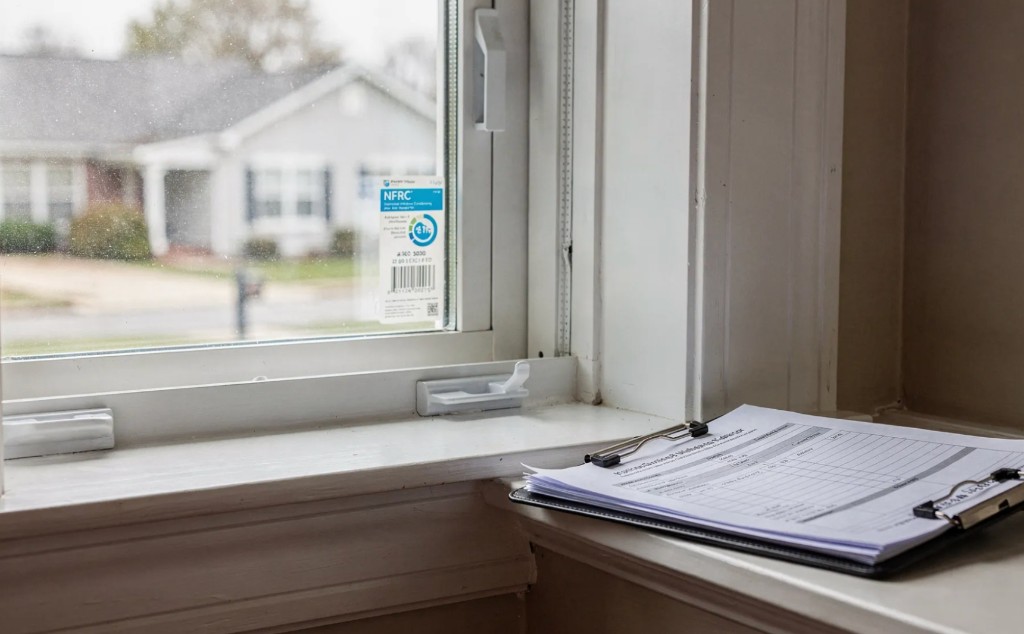
- NFRC label on each unit is your proof at tax time and rebate filing
Common NJ gotchas and how to sidestep them
Most incentive problems trace back to paperwork, timing, or scope gaps. Here is what we see on North Jersey estimates.
- The ENERGY STAR assumption: not every labeled unit qualifies for 25C. Ensure the exact model and glass package meet current IRS and ENERGY STAR criteria and keep the certification statement
- The product-labor blur: if your invoice does not split materials and labor, your 25C claim may be reduced or denied. Get the split in writing
- Program timing: whole-home rebates often require pre-approval or modeling first. Installing now and applying later can forfeit incentives
- Insert vs full-frame surprises: inserts can leave old rot or leaky flashings untouched. If drafts are the main complaint, full-frame with new flashing may be the smarter lifetime fix
- Condensation panic: new tight windows can reveal indoor humidity issues. Ask about ventilation and bath fan runtime so you do not mistake moisture for a window defect
A simple plan to stack incentives without stalling the job
You do not need hype. You need the right paperwork, a precise quote, and a contractor who treats details like money in your pocket.
Verify 25C eligibility, check any NJCEP or utility options that fit your project, and insist on a line-by-line scope before you sign.
- Decide early: 25C only, or 25C plus a whole-home path? The latter needs modeling and pre-approval
- Get your documents: manufacturer certification, NFRC specs, and a product-only invoice
- Lock financing: if using a utility 0% loan, apply before ordering windows
- Schedule installation in the tax year you plan to claim, and keep those NFRC labels until you have filed
Common questions
Energy Star windows FAQ
The federal Energy Efficient Home Improvement Credit (25C) covers 30% of qualifying window product cost, capped at $600 per tax year for exterior windows and skylights. Doors are $250 each up to $500. The total annual envelope cap is $1,200. Installation labor does not count. Verify current IRS rules at quote and tax time.
Get a written Energy Star window quote at your house
NJ Vinyl Siding specs Energy Star glass by orientation, splits product and labor on your written proposal, and documents NFRC ratings, flashing scope, and manufacturer lines including Pella, Andersen, Marvin, Harvey, and Simonton when named on the quote.