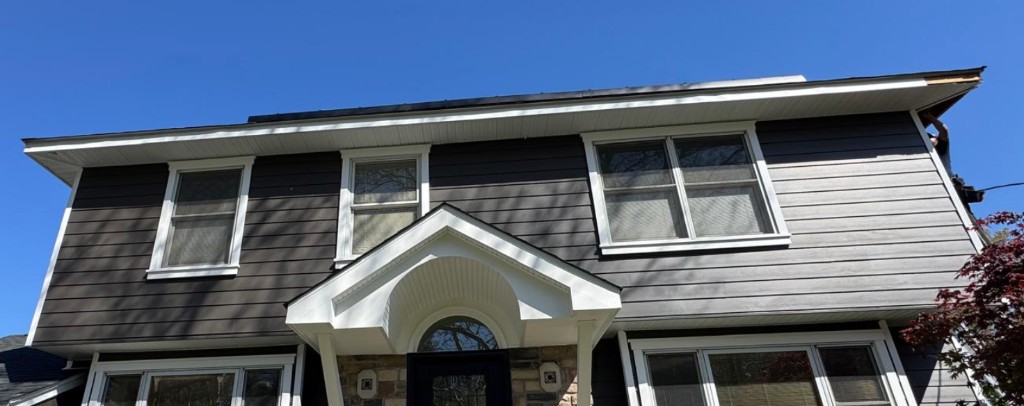
Material comparison
Vinyl and James Hardie both work in North Jersey. The right pick depends on your house.
NJ Vinyl Siding installs both premium vinyl and James Hardie fiber cement. This guide explains when each material makes sense for freeze-thaw winters and wind off the Palisades or Shore.
8 min read
23+
Years in North Jersey
Vinyl and Hardie since 2003
5
Counties served
No trip fee
50 yr
Hardie manufacturer warranty
HardiePlank lap siding
20–35%
Energy savings potential
Insulated vinyl packages
Key takeaway
NJ Vinyl Siding installs both premium vinyl and James Hardie fiber cement.
When premium vinyl is the better fit
Premium vinyl wins on upfront value, install speed, and zero repainting for most homeowners who want a clean exterior without a paint schedule. Modern insulated lap and dutch-lap profiles look nothing like the thin panels from the 1980s and 90s. Color is baked in, J-channel and trim accessories have improved, and foam-backed panels cut drafts on ranches and split-levels across Bergen and Passaic.
If your HOA allows realistic wood-grain vinyl, you get a finished look in days instead of weeks. Tear-off, housewrap, sealed openings, and custom aluminum capping still matter. The material is only half the job.
- Fastest path to a fresh exterior on typical 1,500–2,500 sq ft homes
- No exterior repainting when you choose standard color-through panels
- Insulated vinyl can cut drafts and outside noise on older wall cavities
- Easier to budget when you want windows or gutters in the same season
When James Hardie fiber cement earns the upgrade
James Hardie is cement, sand, and cellulose fiber formed into planks, panels, and shingles. It is roughly three times heavier than vinyl and moves less in freeze-thaw cycles. The surface takes paint like wood but does not rot, warp, or feed termites. Fire resistance and a painted-wood look matter on streets where buyers compare exteriors up close.
HOA boards that reject standard vinyl texture often approve HardiePlank or HardieShingle samples. Palisade-facing walls in Fort Lee, Edgewater, and Cliffside Park take more wind-driven rain than inland blocks. Fiber cement on exposed elevations with vinyl or insulated lap on protected walls is a common split on North Jersey homes.
- Painted-wood look that passes many colonial and craftsman HOA reviews
- Non-combustible fiber cement where fire rating matters
- ColorPlus factory finish or field-painted options with long paint life
- HardieShingle accents on gables pair with HardiePlank field walls
How North Jersey weather treats each material
North Jersey sees coastal salt air near the Hudson, heavy rain, summer heat, and repeated freeze-thaw from December through March. Any siding fails when housewrap is skipped, flashing is caulked over old rot, or panels are nailed tight with no room to move.
Installed correctly, premium vinyl, James Hardie, and Ascend composite all handle our climate. The choice is exposure, HOA rules, how long you plan to stay, and whether you want a paint cycle on the calendar.
- Wind off the Palisades and river: spec corners, soffits, and sealed openings first
- Inland freeze-thaw: both materials need proper WRB and flashing at every opening
- Shaded tree lines: pick products that resist moisture behind the panels
- Multi-story walls: weight and crew staging affect timeline more than panel name
Maintenance and cost to own
Premium vinyl and factory-finished composites need washing and trim checks, not full repaints. James Hardie with ColorPlus factory finish carries a manufacturer fade warranty; field-painted Hardie needs a repaint cycle on a longer schedule than wood.
NJ Vinyl Siding writes fixed-price proposals for vinyl and Hardie side by side at your estimate. You see line items for tear-off, housewrap, panels, trim, and labor before anyone removes the old siding. No surprise change orders after demo day.
- Vinyl: wash gently, check caulk at windows, avoid high-pressure spray at joints
- Hardie: inspect paint every few years on field-painted jobs; ColorPlus needs less upkeep
- Both: fix failing trim before water gets behind the field panels
- Resale: streets in Ridgewood, Montclair, and Westfield reward exteriors that look intentional
Side-by-side at a glance
| Topic | Premium vinyl | James Hardie fiber cement |
|---|---|---|
| Upfront investment | Lower installed cost on most homes | Higher material and labor; longer install days |
| Paint or color | Color through panel; no repaint schedule | ColorPlus factory finish or field paint |
| Weight and feel | Light panels; faster daily progress | Heavier; solid feel; two-person lifts on tall walls |
| Fire resistance | Melts under extreme heat; check local codes | Non-combustible fiber cement |
| HOA scrutiny | Works when wood-grain texture is approved | Often passes stricter architectural reviews |
| Typical timeline | Often 3–7 days on average homes | Often 5–10 days depending on stories and trim |
Common questions
Vinyl vs James Hardie FAQ
Vinyl typically offers the best upfront value, fast installation, and zero repainting with realistic wood-grain textures. James Hardie delivers a premium painted-wood look, strong dimensional stability, and fire resistance at a higher cost with periodic repainting on field-painted jobs. Both perform well in New Jersey freeze-thaw cycles when installed with proper weather barriers. NJ Vinyl Siding provides side-by-side specs and fixed-price proposals for both.
See both materials at your house
NJ Vinyl Siding brings vinyl and James Hardie boards to your estimate. Fixed-price proposal in writing.